zueducator

Online education for all on health, science, technology, business and management...

ad3

Showing posts with label STET. Show all posts

Tuesday, September 17, 2024

10 Things to know About Child Development and Pedagogy

Introduction

In this blog/article, you will learn about some important terminologies and topics of child development and pedagogy frequently asked in CTET, B.Ed., and NET exams. This article outlines many optimization strategies to boost your teaching.


Horace Mann

Horace Mann is often referred to as the Father of American Education.

Lord Macaulay

Lord Macaulay is known as the father and founder of the current education system.

Lord Macaulay is also known as the father of modern education in India.

Friedrich Fröbel is known as the father of the kindergarten.

W.H. Killpatrick is known as the father of the project method.

Maria Montessori is known as the mother of the Montessori method.

Henry Edward Armstrong is known as the father of the Heuristic method

Helen Parkhurst is known as the mother of the Dalton method.

Franklin Bobbit is recognized as the founder of modern curriculum theory.

Edward L Thorndike is known as the father of educational psychology.

·       Plato is widely considered the father of educational philosophy.

Charles Spearman proposed the two-factor theory of intelligence.

Wolfgang Kohler has given the insight theory of learning. The Insight theory of learning is also known as the Gestalt theory of learning

Edward L.Thorndike has proposed the trial-and-error theory

Bruner’s theory is associated with discovery learning

Maslow is related to the self-actualization theory

Lev Vygotsky is associated with the social constructivist approach to learning

Jean Piaget is associated with the cognitive constructivist approach to learning

Pavlov and Skinner proposed the Behaviourist theory of learning

Pavlov is related to the classical conditioning theory

Skinner is associated with the operant conditioning theory

Bacon said, Mathematics is the door and key of science.

Benjamin Peirce said, Mathematics is a science which draws necessary conclusions

Armstrong has given the Heuristic method.

·       Ovide Decroly is widely recognized as the father of inclusive education.

·       John Dewey said, "A just society begins in a classroom where questions are welcomed".

·       According to Plato, teaching is the process of guiding students towards objective knowledge through the reasoned understanding of truth.

·       According to Confucius, teaching is defined as the process of leading toward self-cultivation.

·       According to B.O Smith, teaching is a system of actions designed to induce learning.

·       According to N.L Gage, teaching is an interpersonal influence aimed at changing the behaviour potential of another person.

·       According to HC Morrison, teaching is an intimate contact between the more mature personality and a less mature one.

·       According to Jackson, teaching is a face-to-face encounter between two or more persons, one of whom (the teacher) intends to effect certain changes in other participants (students).

·       According to Skinner, teaching is the arrangement of contingencies of reinforcement.

Pedagogy

·       The father of modern Pedagogy is Johann Heinrich Pestalozzi. His immense contribution is in establishing the scientific foundations of the teaching-learning process.

·       Pedagogy and Pedagogue come from the Greek Paidos “boy, child” plus agogos “leader”.

·       Pedagogy is the method and practice of teaching, especially as an academic subject or theoretical concept.

·       Pedagogy is the “art”, science, or profession of teaching.


Pedagogy of Mathematics

·       Pedagogy of Mathematics means the science of teaching Mathematics.

·       Pedagogy of Mathematics refers to the methods and strategies used to effectively teach mathematical concepts.

·       Pedagogy of Mathematics encompasses the theory and practice of teaching Mathematics, including the specific interactions between teachers and students, selection and presentation of content, and the use of various teaching approaches and resources. 

Click the link below to know

Key features of the Mathematics Pedagogy         Mathematics

Types of mathematics teaching


Pedagogy of Physical Science 

The Pedagogy of Physical Science refers to the theory and practice of teaching physical science, focusing on the methods, strategies, and principles for effective science education.


                                Click the link below to know                    


Fluency

Fluency means having an easy and smooth flow and rhythm when speaking.

Social interaction

·       Social interaction is how we act and react to those around us.

·       Social interaction includes those acts people/children perform toward each other and the responses they give in return.

·       As children grow and learn, they require social interactions with others to form a sense of self and to develop their cognitive, emotional, and language skills.

·       Some common examples of social interaction are peer groups, buying food from a street vendor, and family members engaged in a conversation.

Heuristic method

·       Heuristic method is a method of teaching that involves placing of children as far as possible in the attitude of a discoverer.

·       In the Heuristic method, the student has to find the answer to his/her problem by unaided efforts.

Piaget's Inductive Logic

Inductive logic refers to the process of drawing a general principle from a specific experience.

Piaget's Conservation

Conservation means that when something changes in shape or appearance, it remains the same.

Piaget theory on cognitive development


3 ways to educate intellectually and academically advanced children than their peers

Lawrence Kohlberg's Moral Reasoning

Describe the Kohlberg's theory of moral development.  VBU Bed 2019-21

Language disorder

A Language disorder is an impairment of comprehension and/or use of a spoken, written, and/or other symbol system. It may involve language's form, content, and/ or function.

Speech disorder

A speech disorder is impaired voice, articulation or speech sounds, and/ or fluency.

Dysarthria

Dysarthria is a Speech disorder caused by muscle weakness (including face, lips, tongue, and throat) controlled by the nervous system.

Apraxia

Apraxia is defined as a speech disorder when the neural path between the nervous system and the muscles responsible for speech production is obscured or lost.

Lisping

A lisping speech disorder is defined as the incapability of producing sibilant consonants (z or s) correctly.

Cluttering

Cluttering is characterized by a patient’s speech being too jerky, too rapid, or both.

Stuttering

·       Stuttering is also called stammering and childhood-onset fluency disorder.

·       Stuttering is a speech condition that disrupts the normal flow of speech.

·       Stuttering is a neuro-developmental speech disorder that commences when neural connections supporting language, speech, and emotional functions are quickly changing, and is characterized by core behavior that usually takes the form of involuntary stoppages and repetition.

Articulation disorder

·       Articulation disorder is also called functional speech disorder or articulation delay.

·       Articulation disorder is the inability to produce sounds correctly in speech.

·       An articulation disorder involves the substitution, addition, omission, or distortion of speech sounds that may negatively impact message intelligibility, for example, producing the word [sun] as [tun].

Motor speech disorder

Motor speech disorders are associated with acquired or developmental 

neurologic  impairments such as cerebral palsy, multiple sclerosis, and 

traumatic brain injury.

PYQs

1. Dysgraphia is a ..................................         CTET-2023

(a) Speech disorder characterized by stuttering and errors in articulation

(b) Locomotor disorder characterized by gross motor impairment

(c) Neurological disorder characterized by trouble in forming letters and shapes

(d) Psychological disorder characterized by lack of attention and impulsive behavior

2. While ..................... agencies of socialism are predominantly important in infancy,  ...................... agencies of socialism also become important in early childhood.                CTET-2023

(a) Tertiary, Secondary

(b) Primary, Secondary

(c) Secondary, Primary

(d) Secondary, tertiary


Thursday, July 25, 2024

Teaching/classroom teaching

Classroom Teaching and Teaching aptitude 

Introduction

This article/blog is designed to discuss and define useful topics, and terminologies related to teaching and teaching aptitude.

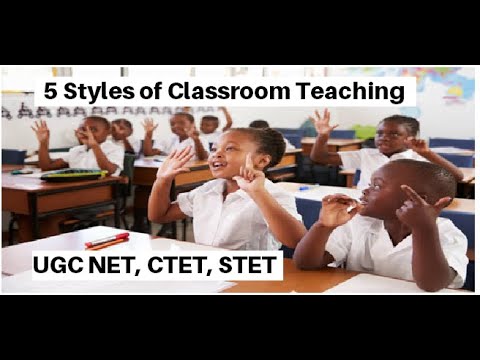
5 Styles of Classroom Teaching


Click the link given below for UGC NET 

                                Teaching Methods

Click the link given below for UGC NET 

Factors Affecting Classroom Teaching


Lev Vygotsky on child development

Jean Piaget's theory on cognitive development

Ways to Educate Intelligent Children


Thursday, September 28, 2023

30 Things To Know About Teaching and Learning: UGC NET Paper-1

 30 Things To Know About Teaching and Learning: UGC NET Paper-1

Introduction

This article/blog is specifically designed to discuss and define some useful terminologies frequently asked in the UGC NET Paper-1 exam.


Idea

Idea means a plan, formulated thought, opinion, or suggestion, especially about what to do in a particular situation.

Fact

  • Fact is a truth known by actual experience or observation.
  • Fact is something known to be true.

Principles

·       Principle means a basic general law.

·       A principle is a kind of rule, belief, or idea that guides you.

·       A principle is a good behavior rule based on what a person believes is right.

Process

·       Process means a series of actions for a particular purpose.

·       Process is a series of changes that happen naturally.

·       A process is a series of progressive and interdependent steps by which an end is attained.

·       A process is a series or set of activities that interact to produce a result.

Method

·       Method means a way of doing something.

·       Method refers to a settled procedure, usually according to a definite, established, logical, or systematic plan.

·       A method is a procedure or process for attaining an object.

·       Method, mode, and way imply a manner in which a thing is done or in which it happens.

Approach

·       Approach means to come near or nearer to somebody/ something.

·       An approach is a way of dealing with somebody/ something.

·       An approach means to begin dealing with a problem or situation.

Event

An event is something that happens especially something important and unusual.

Observation

·       Observation is the activity of paying close attention to someone or something to get information in numerical form.

·       Observations can be overt (subjects know they are being observed) or covert (do not know they are being watched).

Rapport

·       Rapport is a friendly relationship in which people understand each other well.

·       Rapport is a relationship characterized by agreement, mutual understanding, or empathy.

·       Rapport is a good sense of understanding and trust.

·       Rapport means harmonious accord or relation that fosters cooperation, communication, or trust.

·       Rapport can be built by showing a personal interest in the customer. For example, if a customer says, he has been in hospital, ask him how the recovery is going.

Teaching

Teaching is fundamentally a process, including planning, implementation, evaluation, and revision.

Click the link to watch the video on Teaching Aptitude


The 4(four) components of the teaching-learning process are (a) curriculum (b) classroom environment (c) learner (d) teaching technology

The teaching-learning process or the education process

The teaching-learning or the education process refers to a systematic, sequential, planned course of action for the teacher and learner to achieve teaching and learning outcomes.

The five steps in the teaching-learning process are (a) Engage (b) Explore (c) Explain (d) Elaborate (e) Evaluate

Teaching-learning methods

I. The Teacher-centered teaching approach includes (a) Guided instruction (b) A Just-in-time teaching method

II.            Student-centered teaching approach includes (a) Interactive lectures (b) Experiential learning

Learner characteristics that don’t impact/influence teaching

·       The skin color

·       Non-transferable

·       Parent’s interests

·       Socio-economic background

·       Size of the family

·       Physical appearance

Cognitive development

·       Cognitive development means how children think, explore, and figure things out.

·       Cognitive development is the development of knowledge, skills, problem-solving, and dispositions, which help children to think about and understand the world around them.

Meta-cognition

·       The father of meta-cognition is John Flavell.

·       Meta-cognition means learning to learn.

·       Meta-cognition is the process of thinking about one’s own thinking and learning.

·       Meta-cognition is the process of thinking and analyzing what, how, and why you think.

·       Meta-cognition is about an individual’s capability to analyze their thinking patterns.

Piaget’s theory of Cognitive development

Piaget’s theory of Cognitive development states that as children’s thinking develops from one stage to the next, their behavior also changes, reflecting the cognitive developments.


Accommodation

·       Accommodation refers to the tendency to adjust to a new object to change one’s understanding to fit in the new object.

·       Accommodation involves altering existing ideas or schemas due to new experiences.

Assimilation

Assimilation is the understanding of new objects or ideas with the existing capacity of understanding.

Both are part of Piaget’s idea of adaptation, or how children learn about and categorize the world.

Click the link to learn about the  Teaching models

Morrison’s teaching model

·       Henry Clinton Morrison developed an approach to learning in which material is organized into units, that students must master to progress to the next level.

·       The unit approach of Morrison is based on unit planning and transaction.

  • The correct sequence of five steps in Morrison’s teaching model at the understanding level is (a) Exploration (b) Presentation (c) Assimilation (d) Organization (e) Recitation

·       The Morrison approach is a revolutionary approach to teaching that allows for personalized learning, critical thinking, and active participation in the learning process.

Education

Education is an enlightening process of receiving and providing knowledge through systematic instruction.  

Father/mother of all learning------ Repetition

Author of the book of learning ------- ER Murray

The first man to write lesson books for children ------ Aldhelm (640-709), abbot of Malmesbury and Bishop of Sherborne

Knowledge

·       Knowledge means information, understanding, and skills gained through learning or experience.

·       Knowledge is the state of knowing about a particular act or situation.

Attitude

·       Attitude refers to an expression of the way one feels.

·       Attitude focuses on how one feels.

Behavior

·       Behaviour is the way that someone acts.

·       Behaviour deals with one’s actions.

Synchronous

Synchronous means existing or occurring at the same time.

Learning

·       Learning is acquiring new understanding, knowledge, behaviors, skills, values, attitudes, and preferences.

·       Learning ability is possessed by humans, animals, machines, and plants.

Learning of education

Learning is an intellectual process of acquiring new skills and knowledge, through experience, study, or teaching.

Click the link to learn about  Learning-1   

Assessment

·       Assessment is the systematic basis for making inferences about the learning and development of students.

·       Assessment is the process of defining, selecting, designing, collecting, analyzing, interpreting, and using information to increase student’s learning and development.

Click the link to learn about the Types of assessment

 ICT

Memory

·        Memory is the process of taking in information from the world around us, processing it, storing it, and later calling that information, sometimes many years later.

·        The term memory is often synonymous with the term primary storage or main memory.

Click the link to learn about the Types of computer memory     ICT-1

Emoticon

·       An emoticon, short for “emotion icon”, is a pictorial representation of a facial expression using characters, usually punctuation marks, numbers, and letters-to express a person’s feeling, mood, or reaction, without needing to describe it in detail.

·       An emoticon is a symbol, the most often used in computed–mediated communications.

·       Emoticons show your feelings when you send an e-mail or text message.

Big data

·       Big data is data that contains greater variety, arriving in increasing volumes and with more velocity.

·       Big data describes a large, hard-to-manage volume of data (structured and unstructured).

·       Big data includes words, sounds, and images.

Small data

Small data are slow and sampled.


Higher Education

Click the link to learn about Higher Education-1    Higher Education-2


 Autocrats

Click the link to learn about the Types of autocrats

Theory

·       Theory is the general idea or principles of a particular subject.

·       Theory refers to an idea or set of ideas that is intended to explain facts or events.

·       Theory is a rational type of abstract thinking about a phenomenon or results of such thinking.

·       A theory is an attempt to explain why and to provide understanding.

·       Theories may be scientific, non-scientific, or of no discipline.

Assumption

·       Assumption (belief) means something you accept is true even though you have no proof.

·       An assumption is an unexamined belief.

·       Synonyms of assumption are supposition, acceptance, belief, expectation, and guess.

Hypothesis

·       A hypothesis is an assumption that is made based on some evidence.

·A hypothesis explains something that has yet to be proven.

·       A simple hypothesis is a statement made to reflect the relation between exactly two variables (independent variable and dependent variable). For example, smoking is a prominent cause of lung cancer.

·       Research hypothesis is a statement that introduces a research question and proposes an expected result.

Click the link to learn about Hypothesis-1


 Sample

A sample is a subset of individuals from a larger population.

Sampling

·       Sampling means selecting the group you will collect data from in your research.

·       Types of sampling includes (a) Random Sampling (b) Block Sampling (c) Judgment Sampling (d) Systematic Sampling

Block sampling

·       Block sampling is a technique used in auditing, where a sequential series of selections is made.

·       Block sampling approach is very efficient because a large cluster or document can be pulled from one location.

Click the link to learn about the Types of Sampling

Probability and Non-probability Sampling


4 Types of Probability Sampling

7 Types of  Non-probability Sampling


Percentile score

A Percentile score is a comparison score between a particular score and the scores of a group.


Scale

A scale is a device or object used to measure or quantify any event or another object.

Scales of measurement

Scales of measurement are how variables are defined and categorized.

Click the link to learn about Scales of measurement 

Communication

·       Communication has been derived from the Latin word “communicare” which means to impart, participate, or transmit.

·       The word “communicare” is derived from the root “communis” which means to make common or to share (common understanding).

·       Communication is sharing or exchanging information, ideas, or feelings.

Click the link to learn about Types of communication

 Synchronous communication

  • Synchronous communication is real-time communication where you can exchange information with others immediately.
  • Synchronous communication requires an immediate response.

Asynchronous communication

·       Asynchronous communication means interaction without real-time conversation – replies can be delayed. For example: E-Mail.

·       Not real-time

·       No immediate feedback

·       Some examples are e-mail, message text, recorded classroom, blogs, discussion boards, and Vlog

Model of communication

Linear communication model

·       Linear communication model is one way.

·       There is no feedback

·       Components of Linear communication model are sender, encoding(words, pictures, symbols), and decoding.

·       Some common examples of linear communication models are newspaper, radio, TV, and magazine.

Transactional communication model

· The transactional communication model is a two-way communication model.

·       Both give and take take place (exchange or transactional).

·       Synchronous in nature

·       There is an immediate feedback

Interactive communication model

·       Interactive communication model is a new communication technique.

·       Asynchronous in nature

·       There is feedback after a delay

Characteristics of effective communication

·       Characteristics of effective communication are clear, concise, concrete, correct, coherent, complete, and courteous.

·       Two-way process

·       Exchange of ideas takes place

·       Continuous process

·       Use of words as well as symbols

·       Communication is all-pervasive

·       Mutual understanding

·       Four key communication components are encoding, transmission medium, decoding, and feedback.

Some positive attitudes of a good communicator are:

·       Letting others know you care about their well-being.

·       Empathetic is very useful in conflict resolution because it can allow you to imagine what others are feeling and understand their actions.

Click the link to learn about Barriers to communication

 Study

·       Study refers to the activity or process of learning about something by reading, memorizing facts, and attending schools.

·       The process of studying entails applying the mind to acquire knowledge, such as through observation, understanding, and imagining possible applications of the knowledge.

Click the link to learn about  Types of study